What the fabric on the card tells you: crochet, rib, mesh, satin, denim and the wash
Seven fabrics do most of the work in this range, and each behaves differently on a body and in a machine. What the label inside a garment has to say by law, how to read a fibre line, and which pieces want a bag and a cold cycle.
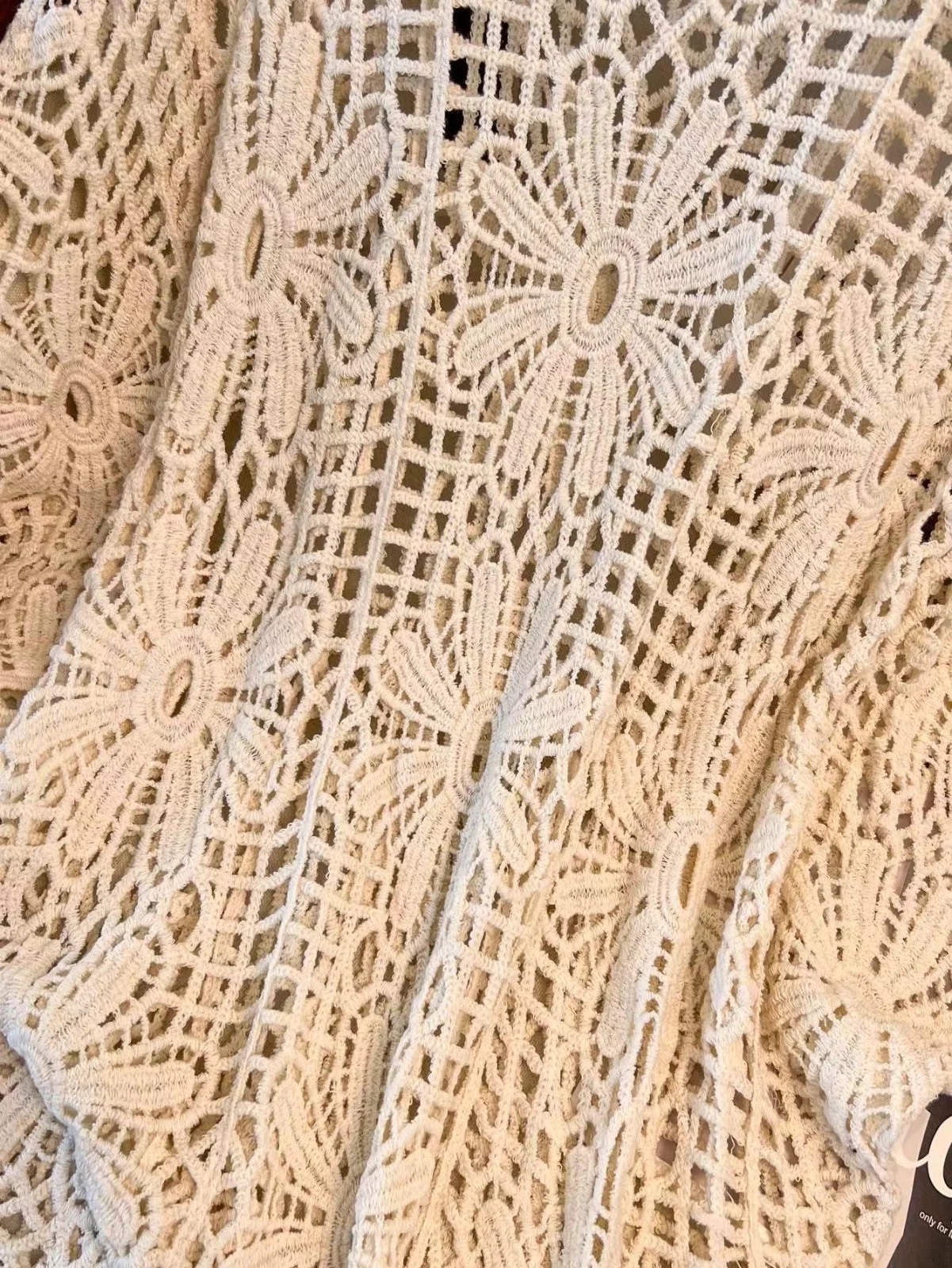
The dryer had a confession to make. A crochet beach top that fit at noon came out of the machine a size larger and full of loose loops. The sequin shorts left a dusting of glitter across everything inside. The satin cami showed the outline of the bra under it. These are the small domestic surprises fabrics give. They also tell you what they want from you. Listen.
Crochet: the holes are the point
A crochet top lives where air and yarn meet. The open crochet knit of a cover-up is open by design. That means the piece breathes and shows what is underneath, and that goes for the MAKEMECHIC Crochet Beach Cover-Up which is unlined and carries some stretch. Unlined here is not a fashion boast. It is a warning and an invitation.
A cover-up that is unlined will reveal swimsuit shapes and edges. A satin cami that is unlined will show a bra. Read the label. The crochet will relax with wear. It will also catch. Rings, rough straps and the zip teeth on a bag are all potential enemies. A snag in crochet is obvious because the holes are the point.
If wet crochet hangs the same way a stretched net does, it will come back if you dry it flat. Dry flat and it steadies. A dryer will encourage loops to pull and sequins to shed. Crochet moves. It forgives in soft ways and asks for simple handling. The yarn will soften with repeated, gentle washing. The card will say whether the fabric has stretch in plain words and the card repeats what the product note says.
Treat it lightly when washing. Treat it like the airy thing it is while you wear it.
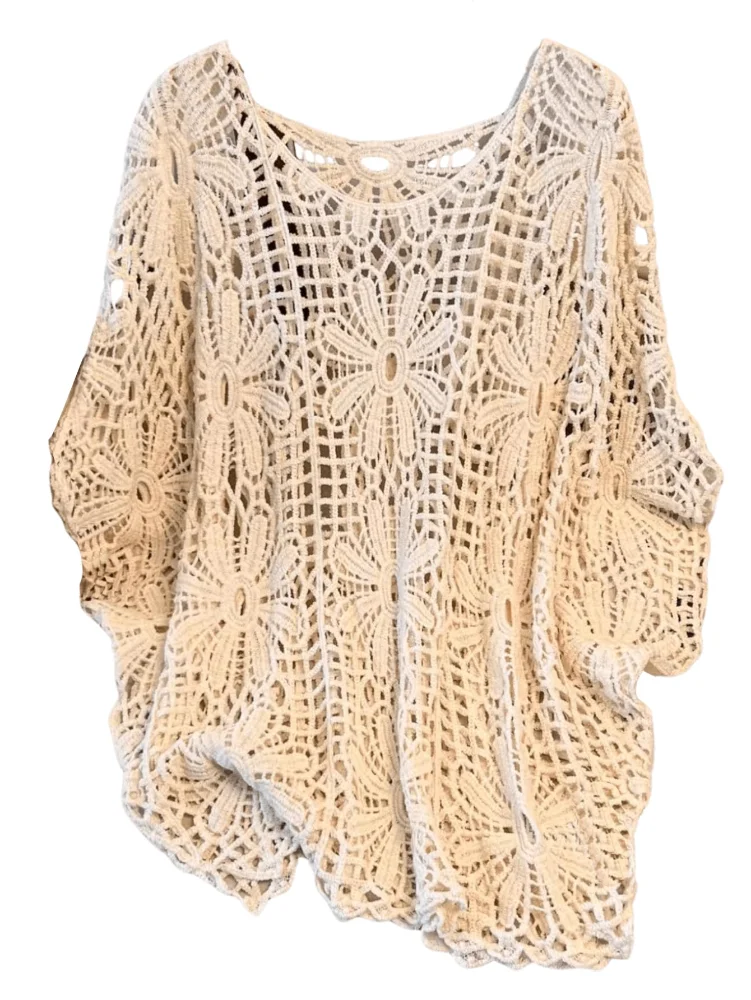
MAKEMECHIC Crochet Beach Cover-Up, 3/4 sleeve
Crochet knit · Sizes XL+ to 3XL+ · 7 colourways
$22.99
Rib and plain knit: it hugs and then forgives
A ribbed sweater is a hugging fabric. The ribs pull in, then snap back. That is why a ribbed mini or a fitted maternity piece feels forgiving when you wobble between two sizes on the tag. The property is not magic. It is recovery. The knit compresses across curves and recovers after you move. Plain knit holds shape in a gentler way and open knits relax more visibly with the first few wears.
The MAKEMECHIC Sheer Asymmetrical Shawl Sweater is an open knit example that settles into its silhouette as you wear it. When a wet knit is hung, gravity stretches it. That is how a favorite sweater grows a size. If a piece is marked "fabric has no stretch" then do not expect it to hug. If it says "slight stretch" or "some stretch" the card means what the product note says.
Read that stretch line the way you would read a promise. If you are between sizes and the piece has rib, sizing up will change the way the ribs compress. Sizing down will change how snug it feels across the shoulders. On the maternity sets and the sweater vests that recovery is the whole reason the rib is there. Knits want gentle handling in the wash and prefer to be coaxed flat to dry when the construction is open.
A machine drum and the wrong cycle is how shape gets lost. That is not a flaw in the yarn. It is a predictable outcome of how knitted loops interact with water and gravity.
Mesh and lace: sheer where it is sheer
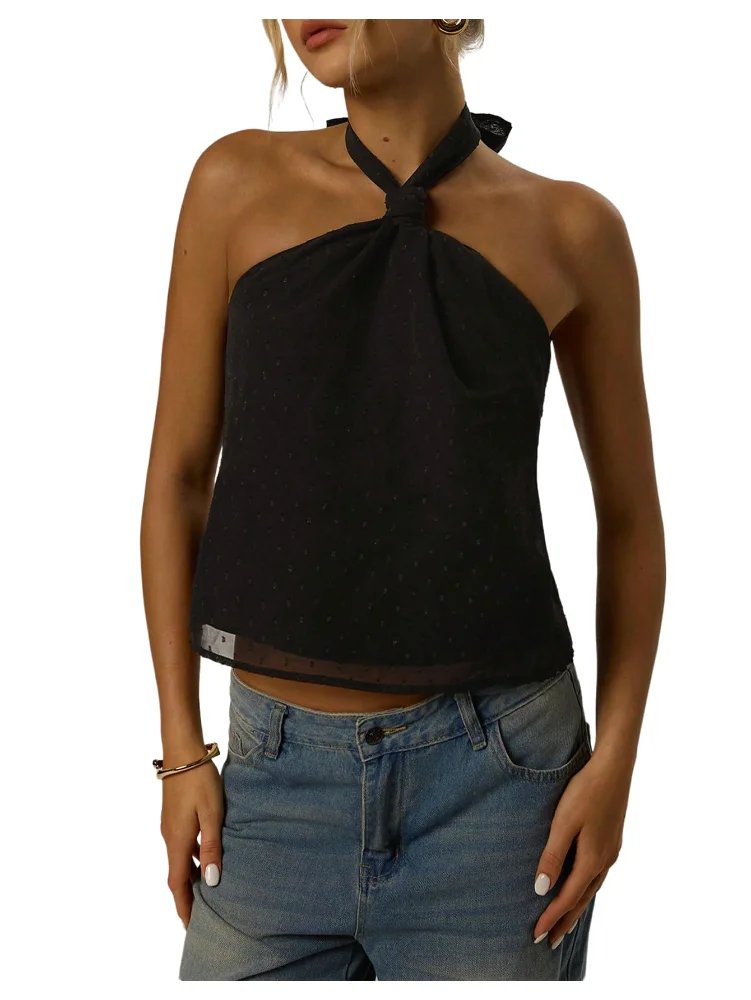
Mesh and lace are honest about what they are. A sheer halter, a Swiss-dot top or a lace bodysuit is sheer where the fabric is. There is no hidden bulk unless the card says a lining is present. Swiss dot is a woven sheer with a tiny raised dot built into the cloth. A polka dot is a printed motif on an opaque fabric.
The difference matters because the first will always show a seam beneath it. Sheer garments do not give. They will not stretch to hide a tight bra strap. They are meant to be layered, over camis or slips. That is part of their design. Layering is not a cheat. It is the point. The MAKEMECHIC Tie Back Sheer Swiss Dot Halter Top ties at the back, has no stretch and runs from XS to 2XL.
Because mesh and lace show what is under them plan outfits with the right underlayer or embrace the reveal. In the wash be aware that these fabrics can catch on anything pointy. Threads and ring settings will yank a hole. The care label must state how to wash and list any warnings against handling that might harm the fabric. Where the label and the product note differ, the label governs.
Sheer fabrics tend to prefer gentler cycles or a bag in cold water. They come back looking best with no tumble drying, laid flat, and steamed only when the label permits it. Treat mesh like a fragile surface that gives you fine detail.
Satin: it reports on what is underneath
Satin tells you everything about what you are wearing under it. A slip, a cami or wide-leg satin pant will drape and catch light and reveal seams beneath. The fabric does not stretch. It will show a line you did not plan. When the label on a satin piece says "unlined" it is effectively describing transparency and fit at once.
Satin likes cold washes and a bag. That request is practical. The weave is smooth and will snag on the wrong zipper tooth. It will also hold a crease as an honest recorder of how you moved through your day. A satin slip does not forgive the wrong bra. They also have a look that changes with a simple press when the care instructions allow ironing.
The Care Labeling Rule requires that those ironing instructions have a reasonable basis. If a label says do not iron, someone has already determined that ironing would harm the garment. Keep in mind that satin drapes. If you are between sizes and the fabric has no stretch plan for the drape to hang. If the piece is marked "slight stretch" the addition of a little elastic yarn will alter how that drape behaves.
A satin cami that has hung wet does not come back to size the way a tight rib recovers. The right wash keeps satin sliding the way it should.
Denim: a shape that holds
Denim is a construction that stands up. Jeans, tailored shorts and cropped jackets cut in denim hold a defined silhouette. That statement is literal. Unless a card says the denim has stretch do not expect it to move the way knit does. The jeans are sized by waist in inches, and the shape is the measure of fit. The fabric resists distortion.
Tailored denim settles after a few wears and keeps the line it was cut to. If you choose a halter vest or a cropped jacket in denim plan for a garment that keeps its lines even after a busy day. Denim does not sprawl or sag like knits. It is also the kind of fabric that tolerates more vigorous wash cycles if the label allows it.
That tolerance does not make it immune to fading. Colour will change with repeated washing and sunlight. The label must list fibre content and origin. That fibre line helps you predict whether a denim will soften quickly or keep its initial stiffness. A heavy plain-surface fabric can also fall into the exemptions the Flammable Fabrics Act sets out. Read the care instructions and the fibre line before you decide how to wash.
Linen blends: cool and crease-friendly
Linen blends are the fabric for a hot afternoon. Tanks, two-piece sets and summer shorts in linen blends feel cool against the skin and soften with washing. Do not be surprised when they crease by lunchtime. That crease is part of the character of the fabric. Linen fibres are stiff by nature and the blends reduce that stiffness while keeping breathability.
A linen blend will relax and soften with repeated laundering and wear. The practical consequence is that a linen garment gets more comfortable over time. It will not return to a crisp factory finish after the first wash. Some people prize a lived-in softness. Others prefer to press it. Labels will tell you whether a piece can be ironed. When the label allows ironing follow the stated temperatures.
The Care Labeling Rule requires a reasonable basis for any ironing permission or prohibition. Linen blends can often survive a warm wash but the label still governs. If the card says the fabric has slight stretch that will affect how fitted a linen skirt or set behaves on the body. Expect creases and expect them to tell you that the fabric is doing exactly what linen does.
Sequin, faux leather and faux fur: the extras demand attention
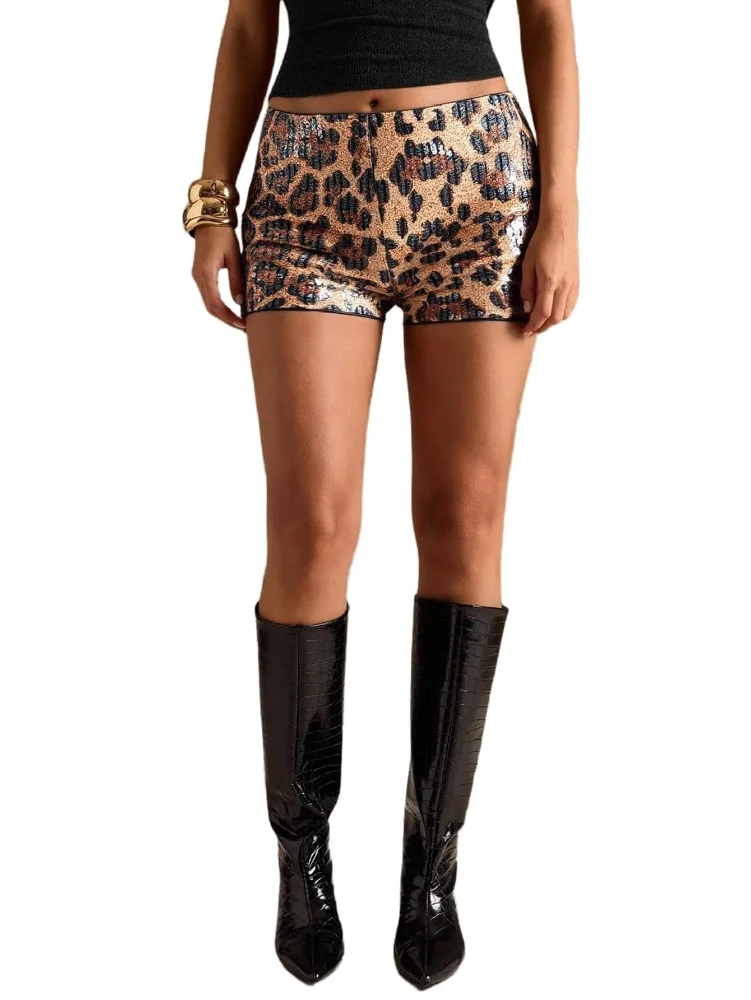
Sequins, faux leather and faux fur add a surface. They also change how a garment behaves. Sequin shorts in our range have sequins applied on the outside over a knit or mesh base. The surface is stiff and warm. It will not stretch unless the card explicitly says some stretch is present. A dryer is how sequins leave everything they touch.
That fact explains a lot about how to wash party pieces. Faux leather sits on a base and behaves like a surface that resists breathability. Faux suede imitates a nap and can feel soft but will not have the resilience of the real thing. Faux fur sheds a little during the first week of wear and prefers a cold wash on its own.
Sequins are decoration and, if they cover more than fifteen percent of the surface, that coverage must be disclosed. Zippers, buttons and beads are not fibres. They are not counted in the fibre line. The construction under sequins is often mesh or knit and that base determines how the garment stretches and moves. Our Cheetah Sequin Micro Shorts are sequin over a knit base with some stretch.
Size them like you would any shorts and keep the dryer out of the equation. Party pieces will ask for a bag in the wash or hand washing. If the label allows a machine cycle choose gentle and cold. The louder the surface, the quieter the handling it asks for.
The label sewn into the piece is the document that governs washing, and where this piece and a label disagree, the label wins.
The label and a three-rule wash routine
The sewn-in label is more than a scrap of cloth. It is a document the law has opinions about. The fibre line lists each generic fibre and its percentage in descending order by weight. A fibre that is under five percent is listed as "other fiber" unless it has a functional significance. That is why spandex may be named even in small amounts when it is there for stretch.
Trim, most linings and the thread that holds a garment together are not part of the fibre count. Decoration that covers more than fifteen percent of the surface must be disclosed. The label must also give washing or drycleaning instructions and must warn against procedures that a buyer might reasonably try that would harm the garment. Each instruction needs a reasonable basis.
The Care Labeling Rule requires that the instruction be supported by reliable evidence that the garment survives the care as written. Finally the label must remain legible for the useful life of the garment. Under the Flammable Fabrics Act fabrics answer to a burn test and three classes of flammability. 6 ounces per square yard or more are exempt from the test because years of testing showed they pass.
Where a piece and its label disagree, the label wins. Keep that sentence in mind as you decide how to wash.
Three rules cover the whole range. Rule one. Anything described as satin, mesh, lace, sequin, faux fur or anything marked with "do not tumble dry" goes into a bag on cold. Rule two. Any open knit, ribbed knit or crochet that says it relaxes with wear should be dried flat. Do not hang wet knits. Rule three. Denim, many linen blends and structured woven pieces follow the label and often survive a normal machine cycle if the label allows it. These three rules are a starting place and not a replacement for the label sewn into the garment, and where a rule and a label disagree, the label wins.
| Fabric | How it behaves on a body | How to wash it |
|---|---|---|
| Crochet / open knit | Open by design, lets air through, stretches a little, relaxes with wear | Dry flat. watch for snags. avoid tumble drying |
| Ribbed / plain knit | Rib hugs and recovers. open knit relaxes with wear | Dry flat. do not hang wet. gentle cycle if label allows |
| Mesh / lace / Swiss dot | Sheer where it is sheer, no give, shows what is under it | Cold wash in a bag. avoid rough hardware |
| Satin | Drapes, catches light, does not stretch | Cold wash in a bag. follow label for ironing |
| Denim | Holds its shape. no stretch unless stated | Follow label. often tolerates machine wash when allowed |
| Linen blends | Cool, creases by midday, softens with washing | Follow label. expect creasing. iron if label permits |
| Sequin / faux leather | Stiff, warm, little stretch. sequins sit on the outside | Cold wash in a bag or hand wash. avoid dryer |
A twenty-dollar crochet top and a hundred-dollar linen shirt will both do the jobs they are made to do. The cheaper piece will show its construction in the hand. The yarn, the way the loops are finished and the edge treatment speak plainly. The linen shirt will feel weight and weave choices that cost more. Neither is right or wrong. Each tells you where it will live best in your wardrobe and in your washing routine. Read the card. Read the label. Then hold the fabric in your hands and decide how you will treat it.
More of this sort of thing is in The Edit, and the MAKEMECHIC rail keeps the whole range one click away on the front page.
This piece is general information about fabric and about how clothing sold in the United States is labelled. The label sewn into a garment is the document that governs its care, and where this piece and a label disagree, the label wins.